
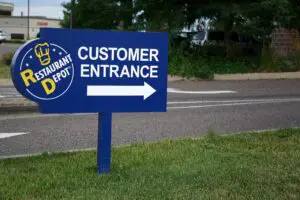
 Confused customers cost you time, money, and credibility. When visitors struggle to find a lobby, restroom, or department, frustration builds before you ever have the chance to serve them. That friction weakens first impressions and pulls staff away from productive work. Strategic wayfinding signage in Dallas-Fort Worth eliminates uncertainty, strengthens your brand presence, and turns navigation into a seamless part of the customer experience.
What Are the Types of Wayfinding Signage?
There are four core types of wayfinding signage: identification, directional, informational, and regulatory. Identification signs help people recognize where they are and confirm key locations within a building or area. These signs are often used to label rooms, departments, offices, or entrances. In healthcare facilities, hospital wayfinding systems rely heavily on identification signage to mark patient rooms, clinics, and treatment areas, reducing stress and confusion for patients and their families.
Directional signs are designed to guide individuals along a route or path. They answer the question “Where do I go next?” and often include arrows, maps, or lists of destinations. In large buildings, such as corporate campuses, corporate lobby signs often combine branding with directional information to lead visitors to meeting rooms, elevators, or amenities without frustration.
Informational signs provide context, rules, or helpful details that go beyond basic directions. This type may include operating hours, safety instructions, historical facts, or facility amenities. Office buildings may use directory signs for office buildings to offer additional context, like company profiles or services provided, enhancing the visitor experience.
Regulatory signs communicate rules, warnings, or required behaviors to maintain safety and compliance. These signs are particularly important in workplaces, hospitals, and public spaces to prevent accidents and ensure legal compliance.
5 Ways Effective Wayfinding Signage Boosts Business
1. Improves Customer Navigation and Experience
Effective signage shows visitors exactly where to go, reducing frustration and confusion. By strategically placing signs, businesses can answer common questions and guide traffic smoothly.
2. Reinforces Brand Identity
Using custom office signs in Fort Worth and interior business signs in Dallas allows businesses to communicate a consistent aesthetic and strengthen customer trust. Visitors remember spaces that are both welcoming and well-branded.
3. Supports ADA Compliance
Following ADA signage requirements for businesses not only meets regulations but also signals a commitment to inclusivity. ADA-compliant signage ensures your space is accessible to everyone while avoiding legal penalties.
4. Increases Operational Efficiency
Clear directions streamline traffic flow, minimize bottlenecks, and allow employees to focus on their core responsibilities. Well-placed signs save time for both staff and customers, improving overall efficiency.
5. Elevates Professionalism and Property Value
Corporate lobby signs and thoughtfully designed interior signs show that your business values both appearance and function. Considering the cost of custom interior signs, investing in professional signage can enhance property appeal and long-term value.
Direct Customers Better
Wayfinding signage does more than point the way. It protects your brand, improves daily efficiency, and ensures your space meets ADA signage requirements for businesses. Legacy Signs of Texas brings local expertise, thoughtful design, and precision installation to every project across Dallas and Fort Worth. Elevate your interior environment with signage that guides, informs, and represents your business at its best.
Schedule your signage consultation with Legacy Signs of Texas today.